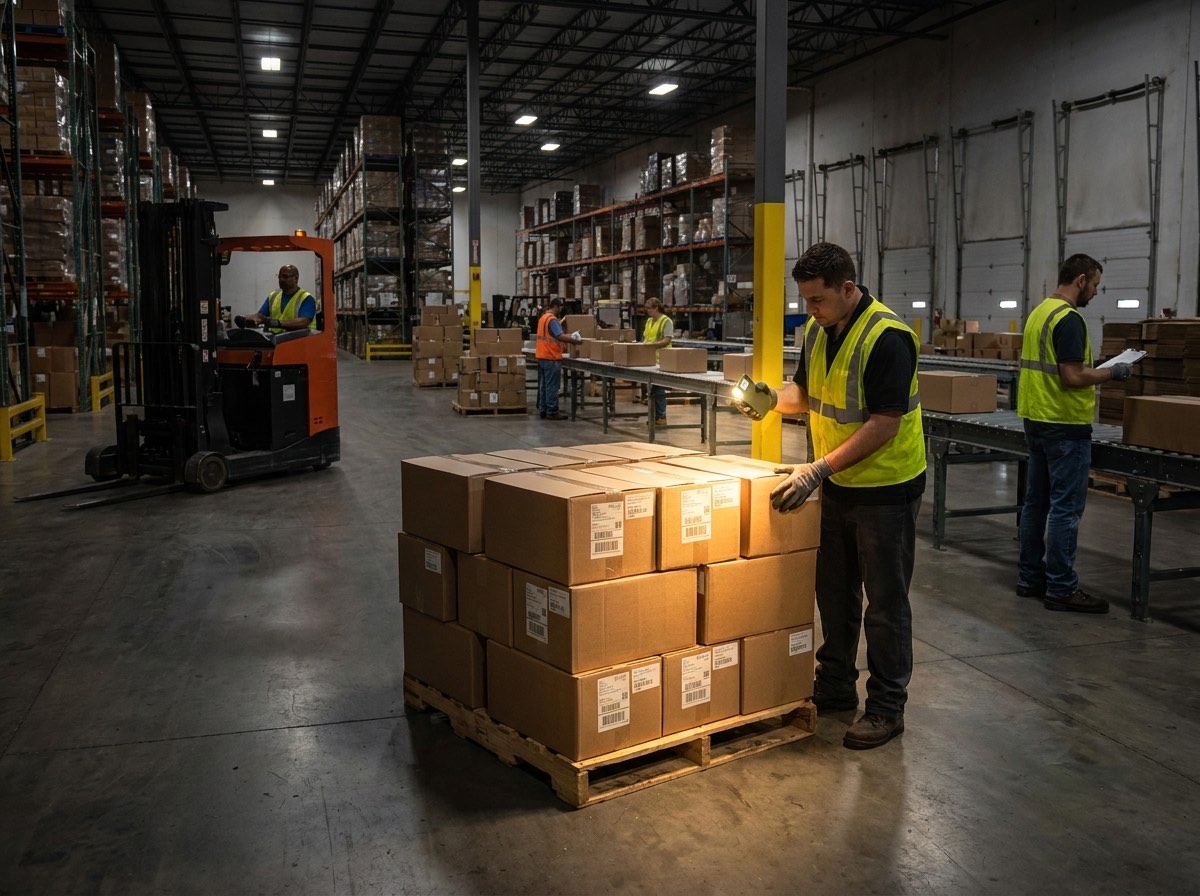
Portable work lights for warehouse night shifts help close the visibility gaps left by fixed overhead fixtures. This buyer’s guide explains how to compare brightness, runtime, mounting, durability, testing, and supplier support before a bulk order.
Warehouses rarely stop at sunset. Overnight replenishment, cross-docking, cold-chain fulfillment, maintenance, and e-commerce picking continue after dark. Fixed fixtures may cover main aisles but leave shadows inside trailers, deep racking bays, conveyor housings, and forklift service areas. Portable lighting puts light at the task without requiring a permanent electrical project.
Why task lighting matters on a night shift
Lighting is only one part of a safe night-shift program, but it is a practical control for visibility. NIOSH notes that work-related fatigue can slow reaction time, reduce attention, and impair judgment. A portable light does not solve fatigue; it can, however, make labels, damage, footing, and equipment components easier to see while other fatigue controls remain in place.
- Picking and scanning: illuminate barcodes, labels, and carton damage without blocking the worker’s hands.
- Loading docks and trailers: fill shadows created by trailers, doors, tall pallets, and moving equipment.
- Maintenance: direct light into guards, panels, engine bays, or conveyor housings.
- Cycle counts and audits: provide a lightweight source for long walks through racking aisles.
Start with the task and the measured lighting gap
Do not choose a warehouse work light from lumen claims alone. First document the task, location, shift length, working distance, and existing illumination. A qualified safety professional can measure illuminance at the work surface and assess local requirements.
For one specific U.S. requirement, OSHA 29 CFR 1910.178(h)(2) says powered industrial trucks need auxiliary directional lighting where general lighting is below 2 lumens per square foot. That rule is not a universal brightness target for every warehouse task, so apply the standards and regulations relevant to your operation.

Portable work light specifications to compare
Verified light output and beam pattern
Ask how the supplier measured light output, peak beam intensity, beam distance, and runtime. The ANSI/NEMA FL 1 standard provides common test methods for portable lighting products. Request the test report and confirm that it applies to the exact configuration in your quote.
Beam shape matters as much as the headline lumen value. Flood lighting helps cover a trailer interior or packing area; a focused beam can make small labels and parts easier to inspect. If workers move between tasks, compare products with usable beam or output controls.
Runtime at the mode you will use
Match runtime to the actual duty cycle, not just the shift length. Ask for runtime at each output mode, charging time, battery type, low-battery indication, and the expected performance after repeated charge cycles. For back-to-back shifts, compare replaceable packs, charging docks, or a rotation plan.
Mounting and hands-free use
A light is useful only if workers can position it securely. Headlamps follow the user’s line of sight. Magnetic bases, hooks, stands, and clips can illuminate a wider work area while keeping both hands available. Test the mount on the actual steel, shelving, vehicles, and work surfaces in your facility.

Durability and environmental protection
Map the environment before choosing an enclosure. Dust, condensation, rain near dock doors, cold storage, cleaning practices, drops, and vibration can each change the requirement. Ask for the applicable ingress-protection and impact-test method, the test laboratory or report, and any limits or conditions. Do not rely on a logo or rating printed on a listing without documentation.
Charging, storage, and fleet management
- Confirm the connector, input requirements, charger quantity, and charging time.
- Plan where lights and batteries will be charged, inspected, and stored.
- Use asset labels or color coding if equipment moves between departments.
- Ask how replacement batteries, chargers, clips, and other wear parts are ordered.
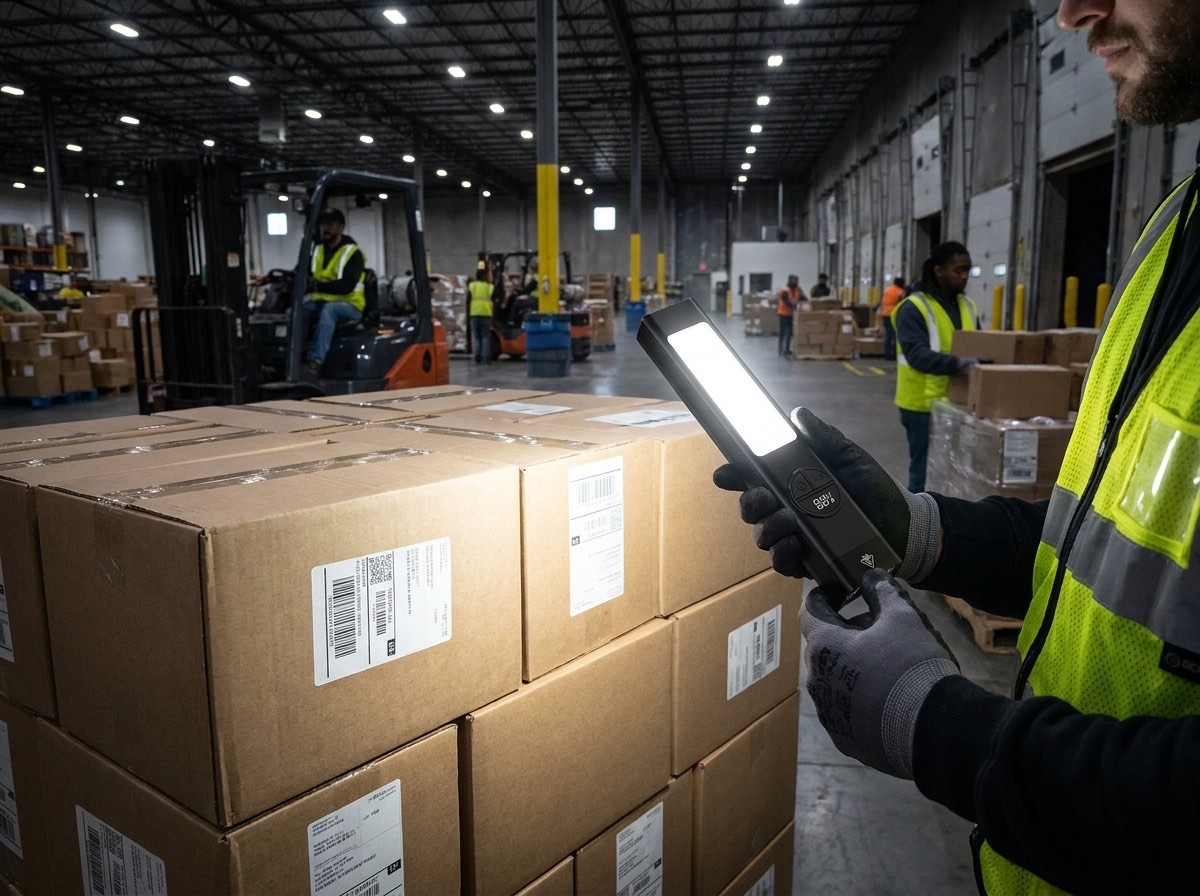
Match the light format to the warehouse role
| Role or task | Useful format | What to validate in a trial |
|---|---|---|
| Order picking and packing | Rechargeable headlamp or compact clip light | Comfort, glare, controls, scan visibility, and runtime |
| Dock and trailer work | Portable flood light with a stable stand or mount | Coverage, shadows, weather exposure, and placement |
| Maintenance | Magnetic, hook, or clip-mounted work light | Mount security, articulation, access, and impact exposure |
| Cycle counts and audits | Lightweight handheld or headlamp | Carry comfort, label readability, and low-mode runtime |
How to vet a portable work light supplier
For distributors, safety-equipment resellers, and multi-site logistics operators, repeatability matters as much as the first sample. Build a written comparison that every shortlisted supplier must complete.
- Exact product identity: model, battery, charger, accessories, packaging, and revision.
- Evidence: dated test reports and declarations that match the quoted product and destination market.
- Quality controls: incoming checks, in-process checks, final inspection, and change-control process.
- Commercial fit: MOQ, sample cost, lead time, payment terms, warranty handling, and spare-part availability.
- Customization: confirm logo, color, packaging, documentation, and tooling options rather than assuming they are standard.
- Repeat orders: ask how the supplier prevents unapproved component substitutions between production runs.
You can use LEBOTE’s work light collection and headlamp range as starting points for a shortlist. Before placing an order, request the current datasheet, sample, test documents, MOQ, lead time, and customization scope for the exact item you are considering.
Compare total cost, not only unit price
The lowest quote can become expensive if batteries fade early, mounts break, chargers disappear, or replacements are difficult to source. Compare the expected service life, charging infrastructure, accessories, downtime, warranty process, and reordering consistency. A small pilot across representative roles will usually reveal more than another round of spreadsheet comparison.
A practical sample evaluation checklist
- Measure the existing lighting and define the task-specific gap.
- Record the required beam coverage, working distance, runtime, and mounting method.
- Test samples in the real location with the workers who will use them.
- Check controls with gloves and assess glare for nearby people or vehicle operators.
- Run a complete discharge and recharge cycle at the intended output mode.
- Verify the supplier’s documents against the exact sample and quoted configuration.
- Document acceptance criteria before approving a bulk order.
Frequently asked questions
How many lumens does a warehouse work light need?
There is no single lumen number for every warehouse task. Start with measured illuminance at the work surface, working distance, beam shape, glare, and the applicable safety requirements. Compare samples in the real location instead of choosing only from the highest lumen claim.
Is a headlamp or a handheld work light better?
A headlamp suits work that follows the user’s gaze and requires both hands. A handheld, stand-mounted, or magnetic work light is often better for lighting a larger fixed area. Many facilities need both formats for different roles.
Do warehouse work lights need an IP rating?
That depends on exposure to dust, condensation, splashes, weather, and cleaning. Define the environment first, then request a rating and supporting test documentation appropriate to that use.
How should buyers compare battery runtime?
Compare runtime at the output mode workers will actually use, together with charging time, battery aging, low-battery behavior, and the shift schedule. A maximum runtime figure at the lowest mode may not represent normal use.
Can portable work lights be customized for a private label?
Customization varies by supplier and model. Ask the manufacturer to confirm logo, color, packaging, battery, beam, certification, MOQ, tooling, and lead-time implications in writing before approving the order.
Prepare a clearer warehouse lighting brief
A useful sourcing brief connects each role to a real lighting gap, then asks suppliers for comparable evidence. Review the available portable work lights and rechargeable headlamps, and confirm the specifications, documentation, order quantity, and customization details required for your project.
Sources: NIOSH Fatigue and Work; OSHA Powered Industrial Trucks; ANSI/NEMA FL 1.